qhqd server
A purpose-built Go server at the core, handling agents, sessions and usage controls.
Command Hub
QHQ is a self-hosted, sovereign AI-agent platform. Run, monitor and direct a fleet of specialised agents from one secure hub — on infrastructure you own.
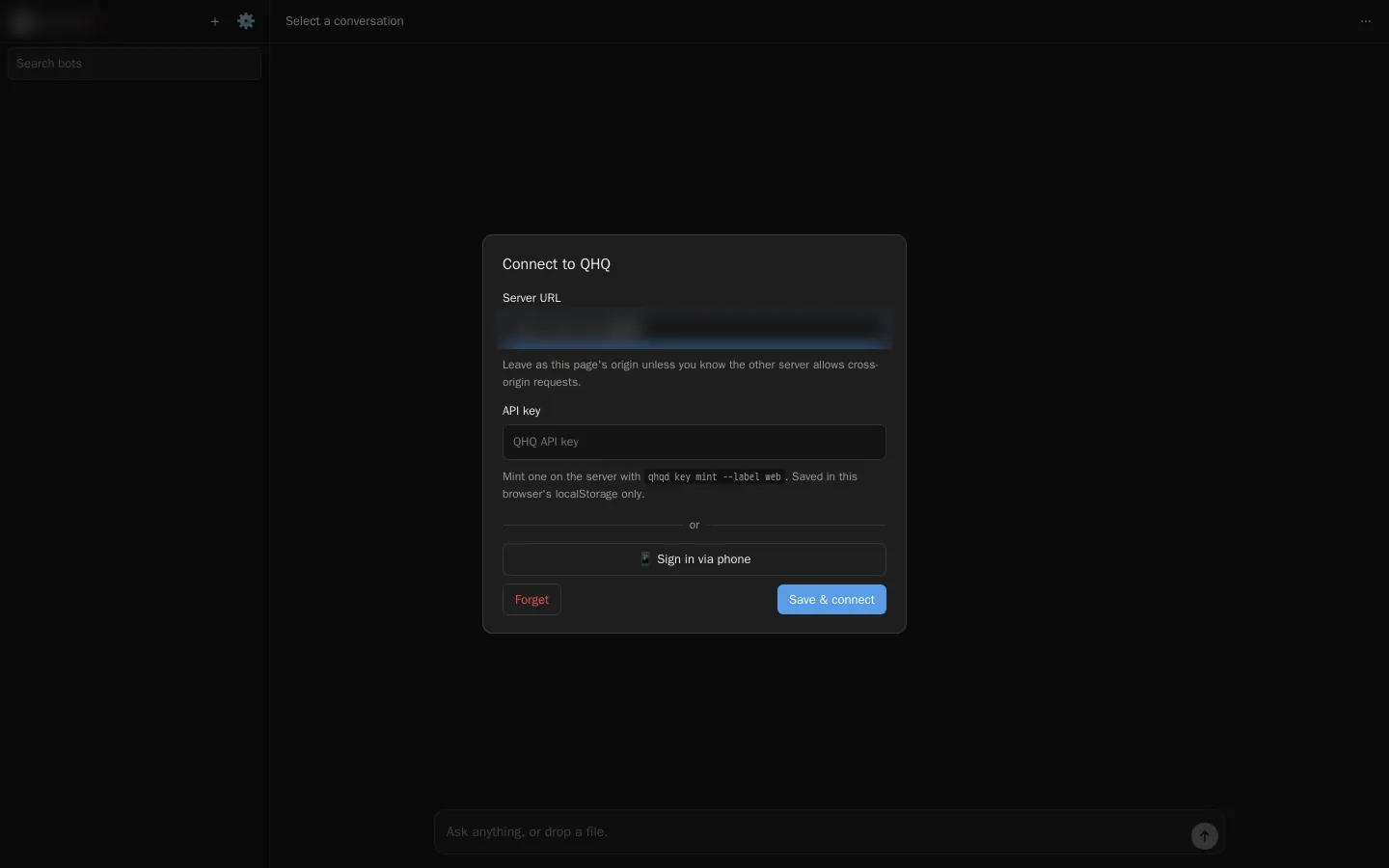
The QHQ web client connecting to its own qhqd server. Screenshot from a live deployment; the server address is blurred.
What QHQ is
QHQ is built and operated by Madison Courto. It brings agents, operations and the people who direct them into a single command hub, without handing your data or workflows to someone else's platform.
The platform
A purpose-built Go server at the core, handling agents, sessions and usage controls.
Identity and access are handled by QHQ itself, not delegated to a third-party app store or SaaS login.
LLM access is routed through OpenRouter, so agents can use the model that fits the job.
Android, Windows and web clients connect to the same hub, so your agents are wherever you are.
How it works
Clients connect over your private network to the QHQ hub. qhqd coordinates the fleet and routes each model call through OpenRouter to the model you chose.
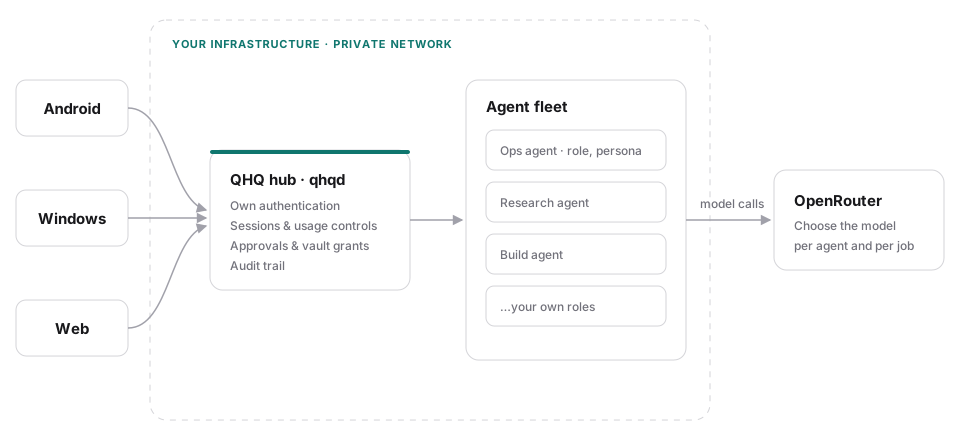
Agentic
QHQ runs many specialised agents side by side — each with its own role, persona and responsibilities — coordinated from one place. Give work to the right agent, watch it progress, and keep a clear record of what was done.

Wherever you are
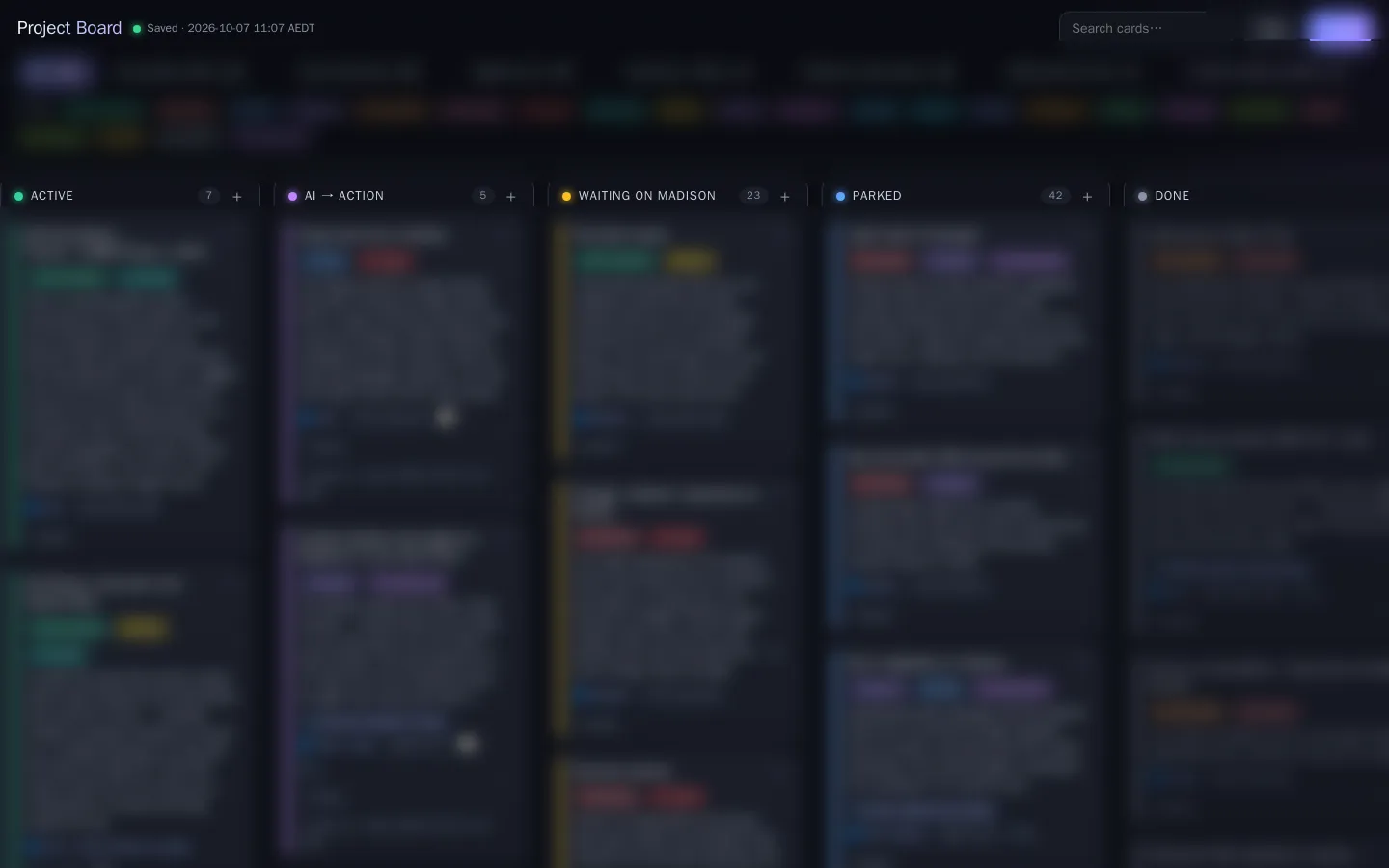
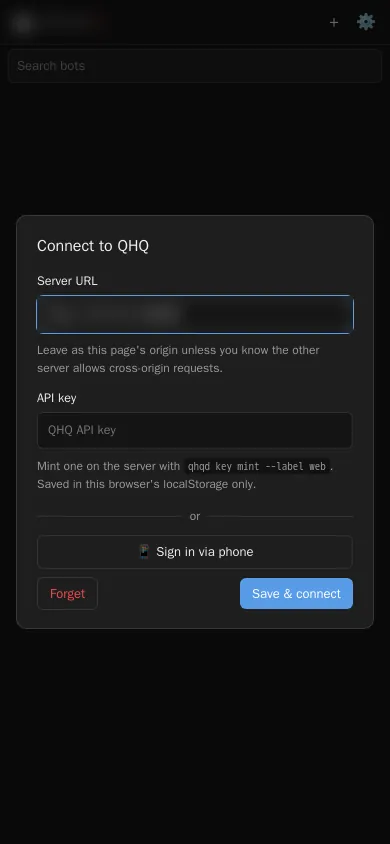
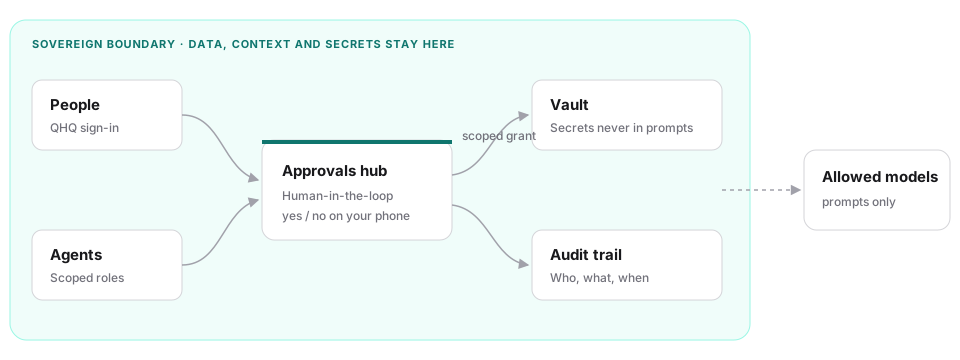
Android, Windows and web clients connect to the same hub. When an agent needs a decision, the request comes to you — a human stays in the loop for anything that matters.
Self-hosted and sovereign
QHQ runs on hardware and networks you control.
Conversations, context and outputs stay inside your environment.
Access, usage limits and which models are allowed are your decisions.
Why QHQ
Most agent platforms ask you to move your work into their cloud. QHQ moves the agents to you.
Self-hosted on your infrastructure. Conversations, context and outputs stay in your environment.
QHQ handles sign-in and access itself — no third-party app store or SaaS login in the path.
Route through OpenRouter and pick the model per agent and per job. Change models without changing platforms.
Many specialised agents, each with a role, persona and responsibilities, coordinated from one hub.
Agents ask; people decide. Approvals reach you on your phone before sensitive actions run.
Credentials are held in a vault and released through scoped grants, not pasted into prompts.
Android, Windows and web clients on the same hub.
A single Go server at the core — a QHQ deployment can run on one server.
Compare
| QHQ | Typical hosted SaaS agent platform | |
|---|---|---|
| Where it runs | Your infrastructure and network | The vendor's cloud |
| Where data lives | Inside your environment | Vendor-managed storage |
| Identity | QHQ's own authentication | The vendor's account system |
| Models | Your choice, via OpenRouter | Often limited to the vendor's supported models |
| Agents | A fleet with roles, coordinated from one hub | Often a single assistant per workspace |
| Secrets | Vault with scoped grants | Stored with the vendor |
| Who sets the rules | You — access, limits, allowed models | The vendor's plans and policies |
"Typical" describes the common hosted model in general terms, not any named product.
Tell us about your agents, your infrastructure and what you want to run on your own terms.